Report: 66th Workshop – One Clear Night Was Enough
66th Workshop - One Clear Night Was Enough
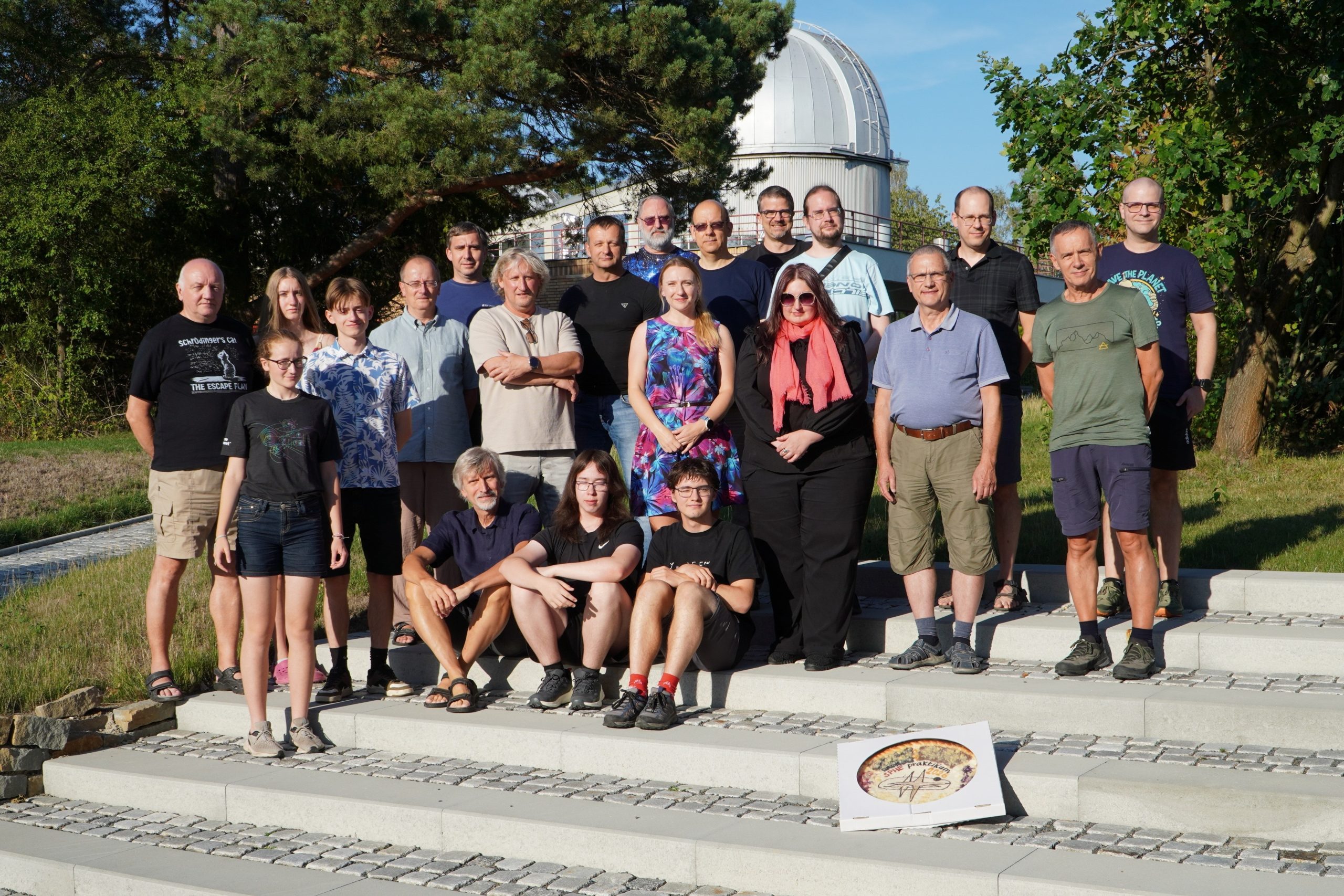
From August 26–30, 2026, the 66th Workshop for Variable Star Observers, organized by the VSS CAS in cooperation with the observatory, took place at the Valašské Meziříčí Observatory. This year’s edition had one peculiarity right from the start: over twenty people arrived, the highest number in recent years when attendance hovered around ten. Alongside long-time members and regular participants, a strong group of students arrived.
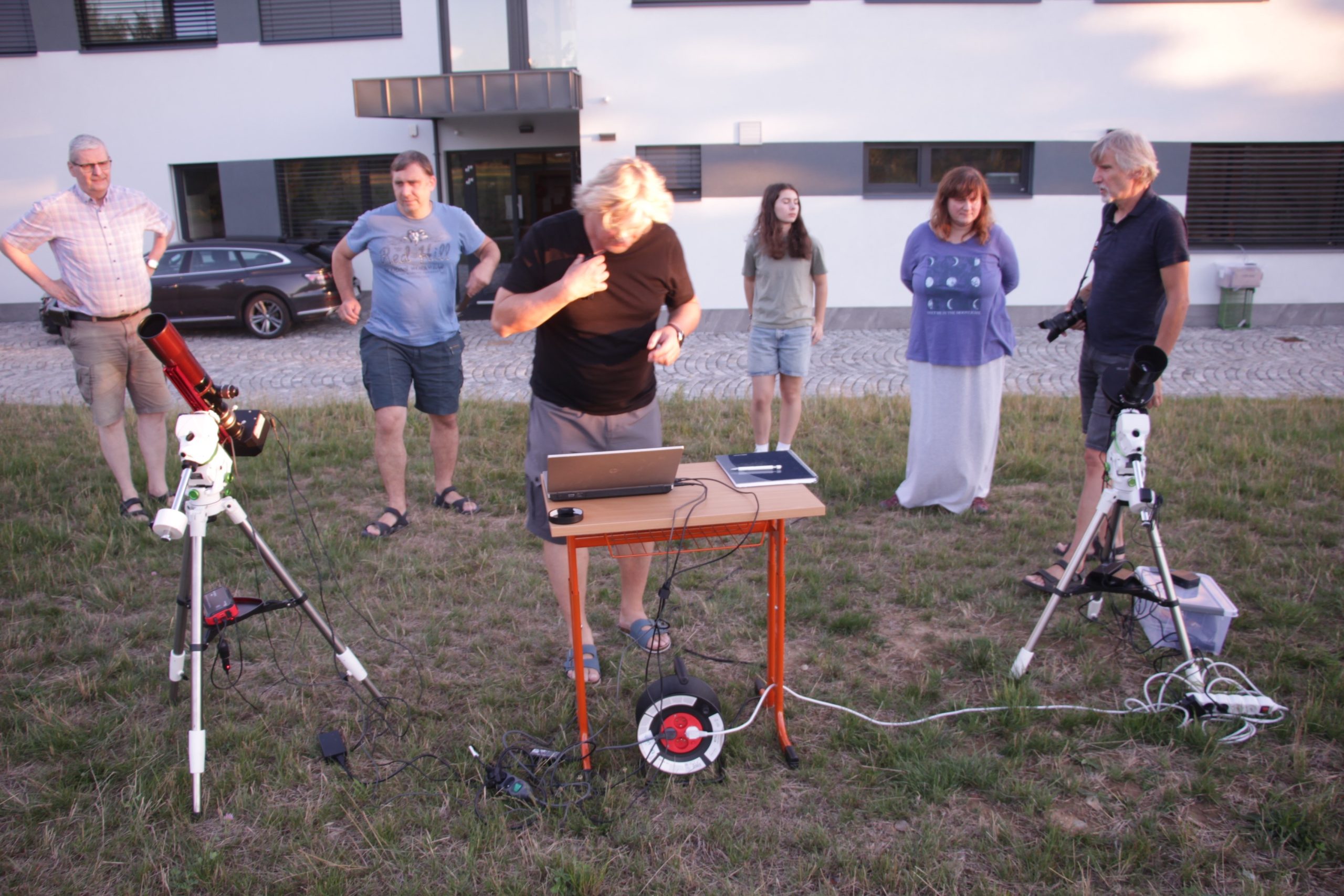
Wednesday was dedicated to arrival, accommodation in the new premises of the Cultural and Creative Center, and getting to know each other. Pavel Cagaš managed a lecture on polar alignment of the mount in the SIPS program, and the first two observing setups were erected at the main building. Alignment was successful between the clouds, but it wasn’t suitable for measurements. The planned training on the section’s ROST telescope was moved to later.
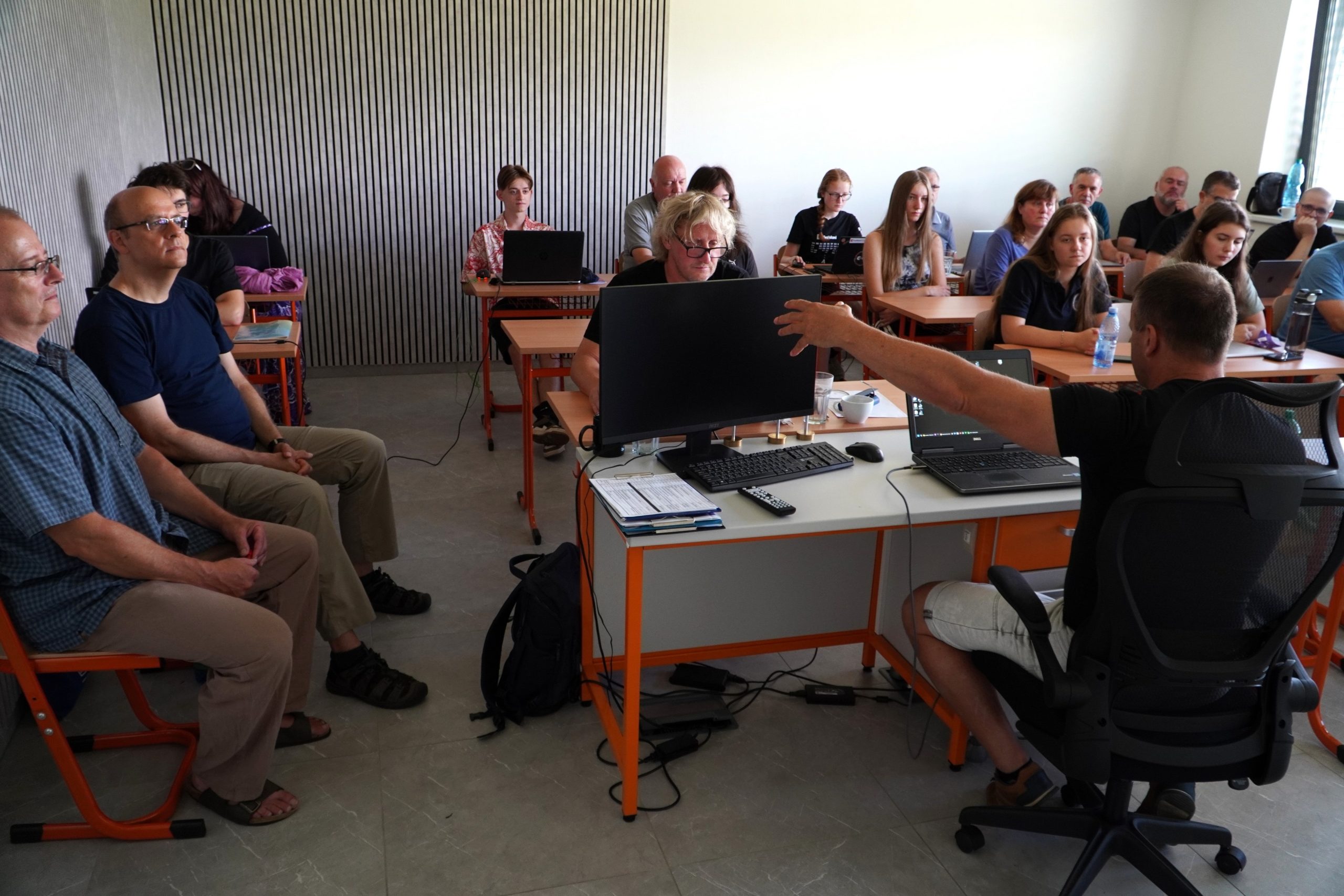
Thursday was opened by Ondřej Pejcha with an unconventional but accessible introduction to the world of variable stars. Then came what is called Varcafe at the workshop—several hours of an interactive seminar on a single topic, this year the astrophysics of accretion and everything around it. A blackboard full of equations, where a person with a weaker mathematical foundation might occasionally get lost, yet for most, it was a huge experience—modern astrophysics in the palm of your hand. In the afternoon, Miloslav Zejda went through the history of the Section and handed out plenty of archival materials for viewing. In the evening, the program was unexpectedly delayed by nearly two hours due to Stanislav Daniš’s public lecture on the experiments that led to quantum physics, which was definitely worth it. Even so, the presentation of the MUOSA observatory and the observatory in Ždánice was managed. The weather initially looked promising; in the end, it only yielded images of the nova in Sge for Martin Mašek, who processed them: V = 8.21 ± 0.02 mag and B = 8.74 ± 0.02 mag (Aug 27, 2026, 21:02 and 21:05 UT).
Friday was photometric. Two morning lectures by Pavel Cagaš reviewed the basics for the experienced and opened up photometry in SIPS for the newcomers. In the afternoon, Kateřina Hoňková presented the Section’s new website directly through its sections: from the “Signature Story” to “Getting Started” and ROST, plus events, news, and other parts. The Signature Story—a story intended to summarize what the Section is and why it’s worth being part of it—was followed by the author of the article with a brief look behind the scenes of its creation. Jan Hykel guided us through the VarAstro database, which is essential for working with it correctly; only due to the modesty of the VarAstro author, some of the amazing new features remained underappreciated. Ladislav Šmelcer, in his traditional overview of eruptive variables, surprised everyone this year by including exoplanet transits. The evening belonged to SILICUPS and controlling observations in SIPS. It was longer, but no one was in a hurry: the sky was overcast.
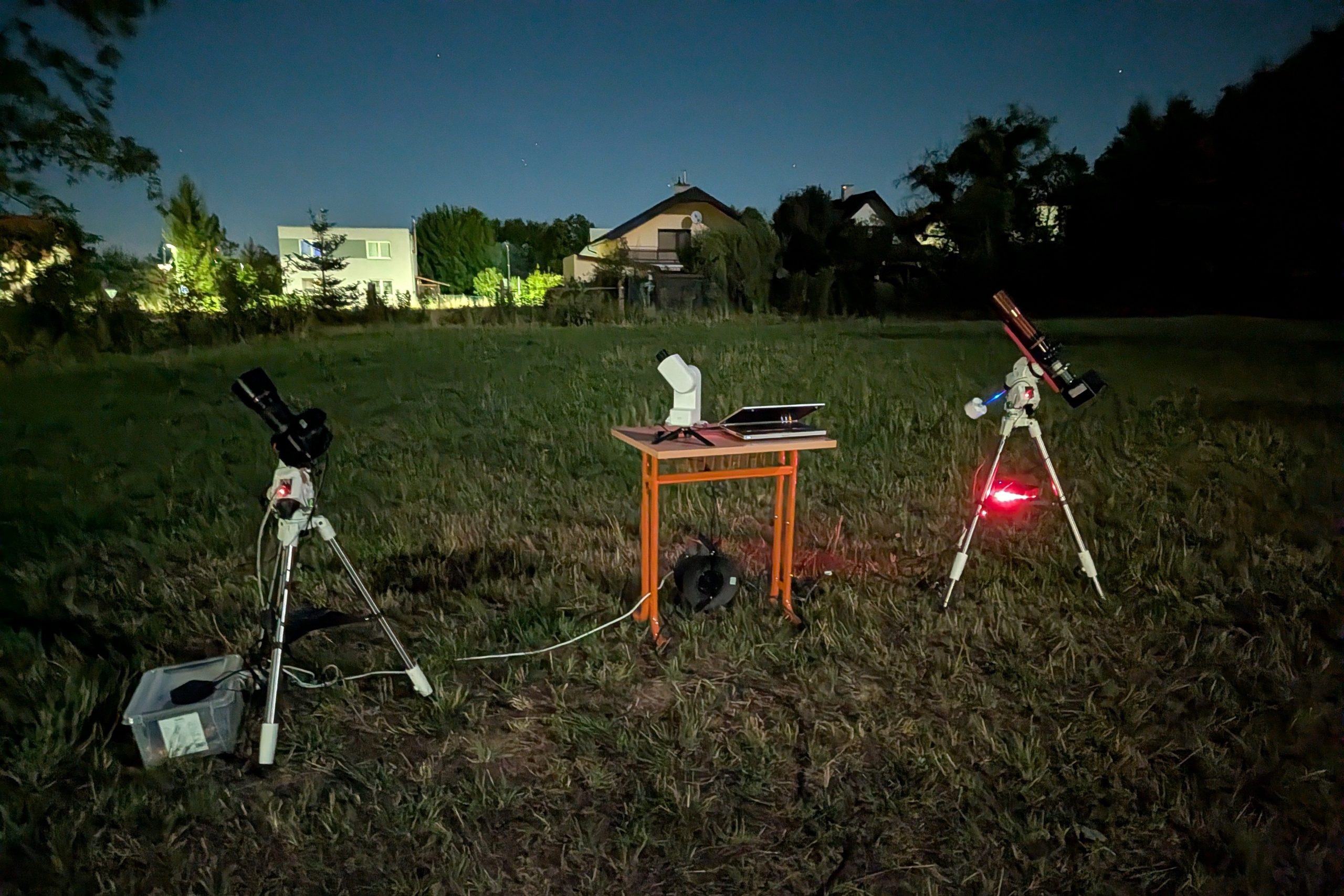
Saturday began with data from the TESS satellite, first in Matúš Kamenec’s independent web application, then in Zbyněk Henzl’s STEP, which he also briefly presented. In the afternoon, the plan was scrapped, and Zbyněk Henzl led a single interactive lecture until the evening on the basics of variable stars for those who had never encountered the topic. The forecast promised a clear first half of the night, and it was necessary to prepare. Teams were formed: for each experienced observer, two or more newcomers or people without their own equipment, one team for ROST, and four for the four brought setups.
The author’s team started at the setup with a description of the individual parts and their functions, then left the choice of target fully to the students. They wanted an exoplanet transit. We searched VarAstro and ExoClock, keeping in mind the limitations of the setup, its location, and the duration of the transit. The first candidate was suitable in everything except for the end around 1:30 AM, while cloud cover was expected to arrive between midnight and 12:30 AM. After a discussion on whether it was worth measuring only the start of the transit (even such an observation makes sense, though it is not preferred), the criteria were relaxed from ideal to acceptable, and TOI-1555 came up: a short transit that fit into the forecast. Half an hour before the start, everything was running. The curve was being plotted online, and later it was clear that the dip had occurred. Satisfaction prevailed. The only concern was the cloud cover. Coincidentally, the same target was chosen by the team on ROST, which was measuring in Ondřejov under significantly worse conditions. After completing the transit, one of the students independently and very well chose the eclipsing binary PP Lac as the next target. The minimum was successfully measured despite high cloud cover; then just darks and the knowledge that flats had to be caught up in the morning—which was successful.
Sunday belonged to Marek Skarka and exoplanets, with an emphasis on upcoming missions and what they can bring to research. Then all teams threw themselves into processing the observations. All measurements from all teams were successful; transits and minima were captured, and under the supervision of the leaders, the students and other participants uploaded them to VarAstro themselves. For several of them, it was the first exoplanet transit or the first variable star minimum of their lives. It’s hard to imagine a better conclusion.
Although there was only one observing night, the workshop was held in a very friendly atmosphere and was a success. A big thank you goes to the Valašské Meziříčí Observatory for hosting. The new accommodation in the Cultural and Creative Center was great, the services excellent, and the return to the observatory after several years was successful. The next opportunity to meet will be the 58th Conference on Variable Star Research, December 4–6, 2026, at the FZÚ AV ČR in Prague, again with the possibility of online participation.
Link to the full photo gallery from the workshop: https://eu.zonerama.com/sphecas/Album/16259757