
Section Activities
The Section’s activities are based on long-standing and mutually meaningful pro-am cooperation.
We dare say that we are leaders in the field now described by the term “citizen science“, i.e., science involving the public, where astronomy enthusiasts actively and meaningfully participate in cutting-edge research.
Our activities can be divided into the following categories:
- Observation of variable stars and exoplanets
- Data processing and analysis
- Publication and sharing of results
- Education and outreach
- Technical facilities and development
Observation of variable stars and exoplanets
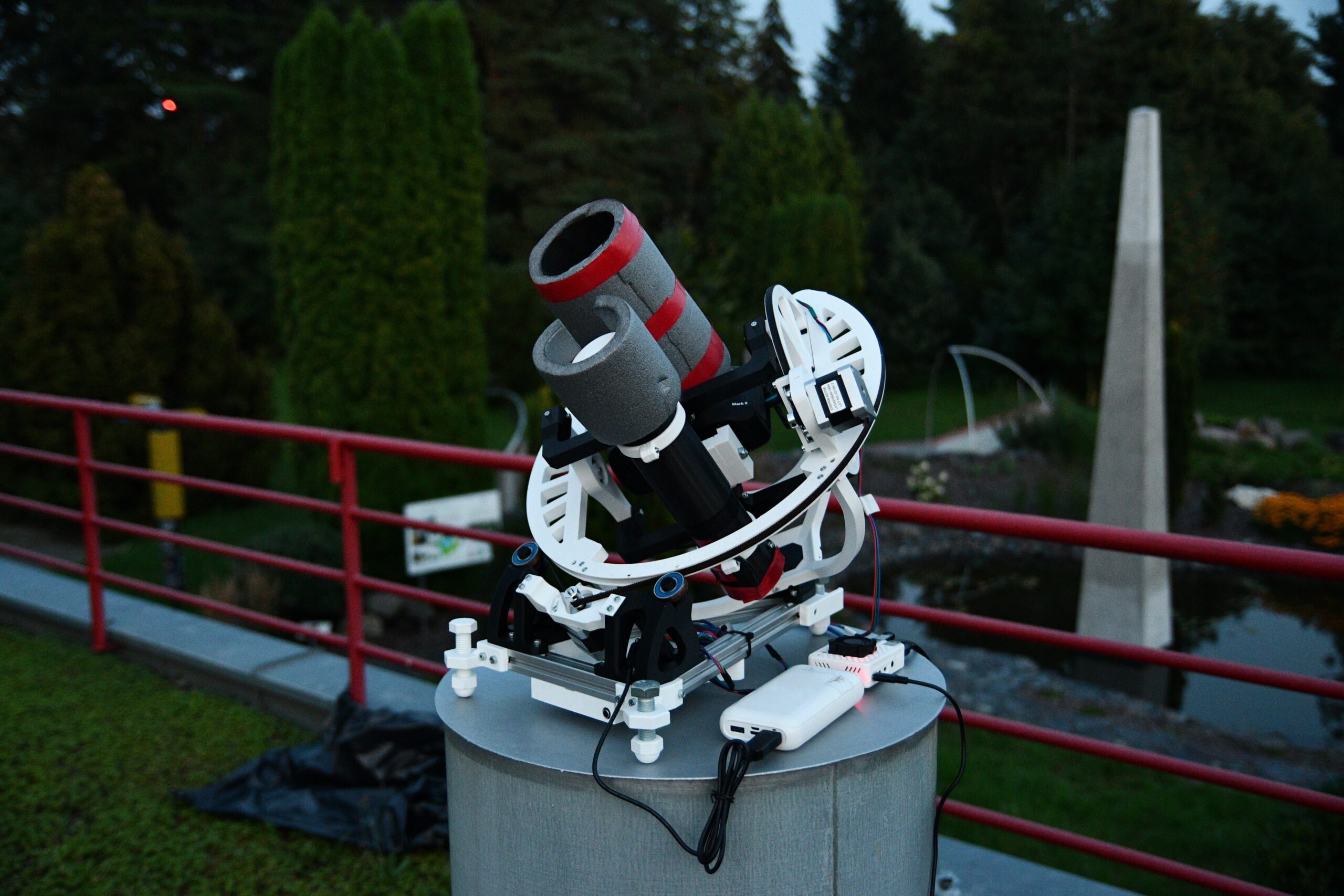
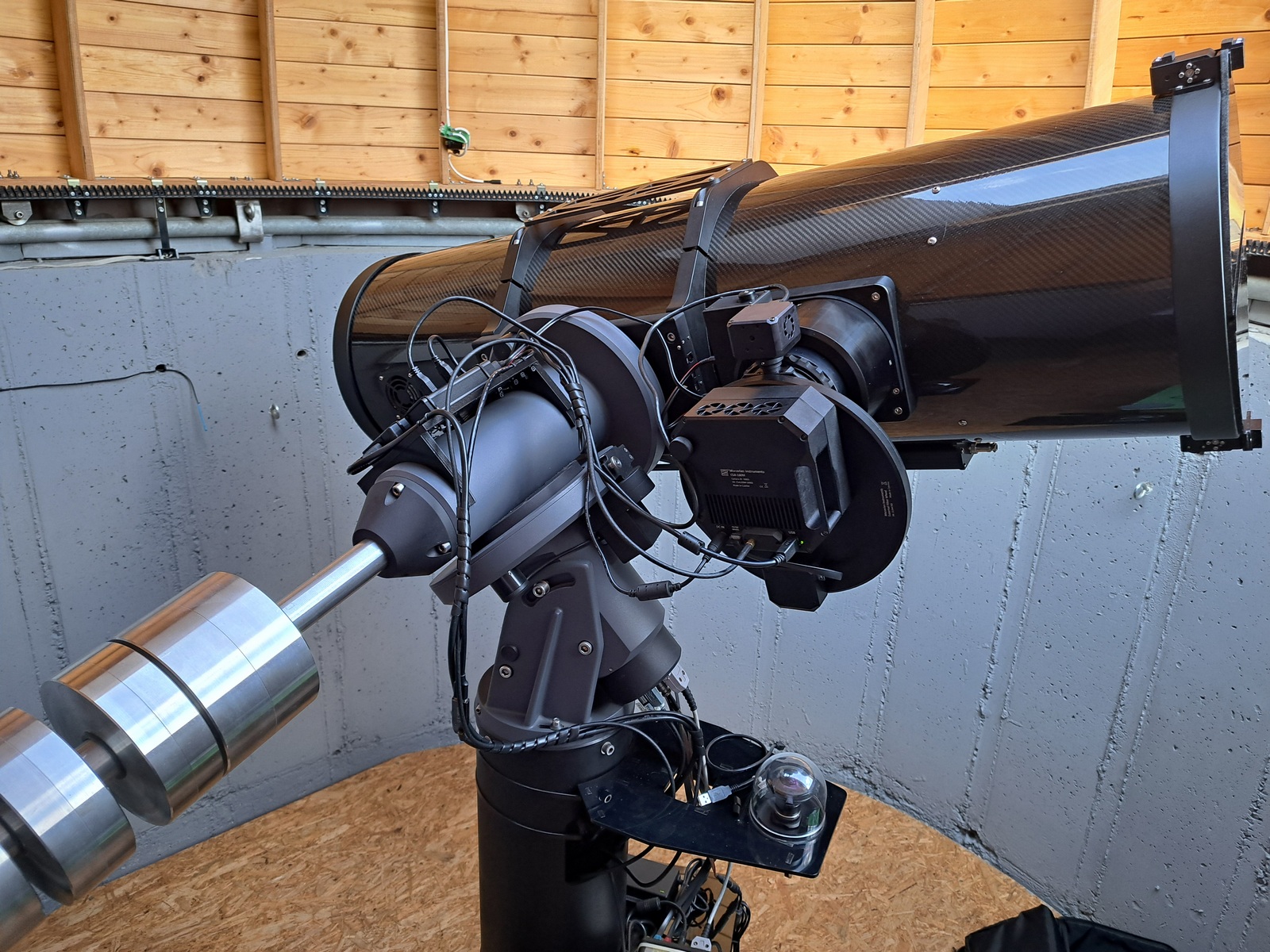
Regular monitoring of stellar brightness changes is now primarily conducted using small and large telescopes equipped with digital technology. While brighter objects (up to approximately magnitude 8) can be captured using standard photographic setups, most observations rely on a guided mount-telescope-detector system. Learn more in the About Variables / Observation menu.
Traditional visual brightness estimates, once a common method for amateur observers, have now receded into the background as their precision no longer meets contemporary scientific requirements.
Over the last ten years, so-called “slipper astronomy” has become most prevalent in the Section, where observers have their telescopes outside in gardens, domes, on balconies, or even in entirely different countries, and observe remotely from the comfort of their homes.
In the Czech and Slovak Republics, several dozen observers are dedicated to professional-level observation. They either have their own observatories, use public observatories, or own mobile observation equipment. Many observers even use more than one observation setup. It is said that the ideal number of telescopes is n+1, where n is the current number of telescopes.
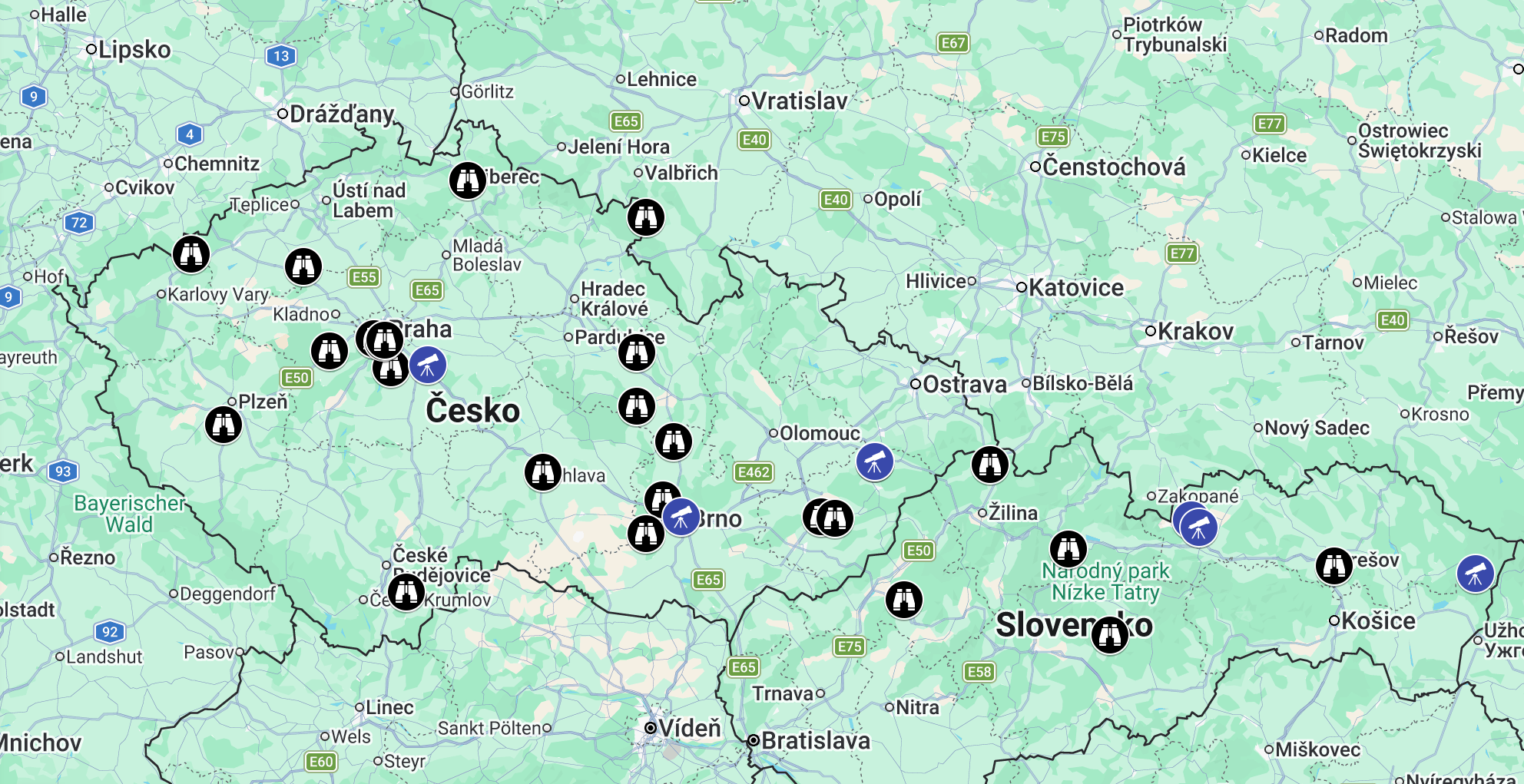
A small overview (by no means all) can be found, along with a basic description of their equipment, on the Variable Star Observers Map, which is also linked at the beginning of this page.

Data processing and analysis
Data processing and analysis form an integral part of the Section’s activities and, in many respects, represent its most “creative” and professional level. In addition to the observation itself, members actively participate in the development and modification of specialized software, often independently. This activity includes not only creating tools tailored to specific projects but also their continuous improvement, presenting features to other members, and organizing training sessions focused on their effective use.
Observation preparation today largely takes place using the STEP program, which enables observation planning, predictions for selected objects, and assessment of their observability. The data acquisition is followed by reduction—the conversion of raw images into measurable photometric data. The SIPS software from Moravian Instruments is most commonly used for this, or the previously widespread Muniwin.
The data analysis itself primarily involves the creation of light curves—graphical representations of changes in a star’s brightness over time and long-term deviations from their periods. The SICILUPS program, also from Moravian Instruments, serves this purpose perfectly.
Based on these light curves, variability periods can be determined, types of variable stars identified, and basic physical parameters of the studied objects derived. This phase often requires a combination of automated procedures and individual interpretation, making it a key step in the journey from mere observation to scientifically valuable results.
It goes without saying that the greatest inspiration and experience regarding observation techniques and methods of data processing, analysis, and publication come primarily through direct contact with other variable star observers, especially at the Workshop for Variable Star Observers, which typically takes place in the summer and spans several days.
You can also find many interesting practical demonstrations and videos on our YouTube channel.

Publication and sharing of results
Publication and sharing of results represent the natural outcome of the Section’s entire observation and analytical activity.
The acquired photometric data and light curves are regularly submitted to international databases, primarily the VarAstro database, which the Section manages itself and where basic analysis based on curve fitting also takes place.
More significant results are often produced in cooperation with professional astronomers and find their place in professional journals, notably Astronomy and Astrophysics. Publications by our members who are co-authors can be found via the Publications link on this website.
For many years, the Section also operated the peer-reviewed journal Open European Journal on Variable Stars, which has had an international editorial board since 2006 and in which published works receive their own DOI. The journal is also fully indexed in global bibliographic databases such as Simbad (Strasbourg, France) and ADS – Astrophysics Data System (Harvard, USA). For future generations, the OEJV is archived in the National Library of the Czech Republic.
Since 2020, the journal has been managed at Masaryk University.
In addition to professional outputs, popular science articles are also produced for the general public, and direct outreach through lectures and meetings plays an equally important role.


The Section’s Observation Equipment
The Section has its own observation equipment, which its members can use or borrow long-term.
A complete mobile observation setup, the so-called “section set”, is available, meeting the requirements for precise photometry of variable stars and exoplanets. The setup consists of a 15cm Newton-type telescope on a guided HEQ5 GoTo mount (Sky-Watcher) and a cooled C2-9000 monochromatic CMOS camera (Moravian Instruments) equipped with Sloan g′r′i′ and Clear photometric filters. The setup also includes a guiding system—an OAG adapter with a C1-3000A guide camera. Approximately once a year, the Section opens a call for applications for the long-term loan of this setup to its members.
A separate cooled C2-9000 monochromatic CMOS camera (Moravian Instruments) with Sloan g′r′i′ and Clear photometric filters is also available for long-term loan. The camera is also equipped with a guiding system consisting of an OAG adapter and a C1-3000A guide camera.
The Section also operates its own remotely controlled ROST telescope, located at the Ondřejov Observatory, which is available to Section members for their observation projects. Detailed information about the telescope, its equipment, and usage possibilities can be found in the separate ROST Section Telescope section.
Event
Every year in November, we organize conferences on variable star research, where observers meet with theorists, collaborations are established, and friendships between astronomers with the same focus are deepened. The most practically oriented event is the Workshop for Variable Star Observers, which traditionally takes place in the summer.

Section activity reports for download
- 2006 - Activity Report of the VSS CAS
- 2007 - Activity Report of the VSS CAS
- 2008 - Activity Report of the VSS CAS
- 2009 - Activity Report of the VSS CAS
- 2010 - Activity Report of the VSS CAS
- 2011 - Activity Report of the VSS CAS
- 2012 - Activity Report of the VSS CAS
- 2013 - Activity Report of the VSS CAS
- 2014 - Activity Report of the VSS CAS
- 2015 - Activity Report of the VSS CAS
- 2016 - Activity Report of the VSS CAS
- 2017 - Activity Report of the VSS CAS
- 2018 - Activity Report of the VSS CAS
- 2019 - Activity Report of the VSS CAS
- 2020 - Activity Report of the VSS CAS
- 2021 - Activity Report of the VSS CAS
- 2022 - Activity Report of the VSS CAS
- 2023 - Activity Report of the VSS CAS
- 2024 - Activity Report of the VSS CAS


